Knees are judged in a ten-minute visit. They fail at home.
Concept v0.3 · November 2026 · funding applied for
Surgery or rehab, back to sport or not, revise the implant or wait: the big knee decisions rest on a hand test in the consulting room and the patient's memory. What the knee does at home — on the stairs, on a site, on the pitch — nobody sees.
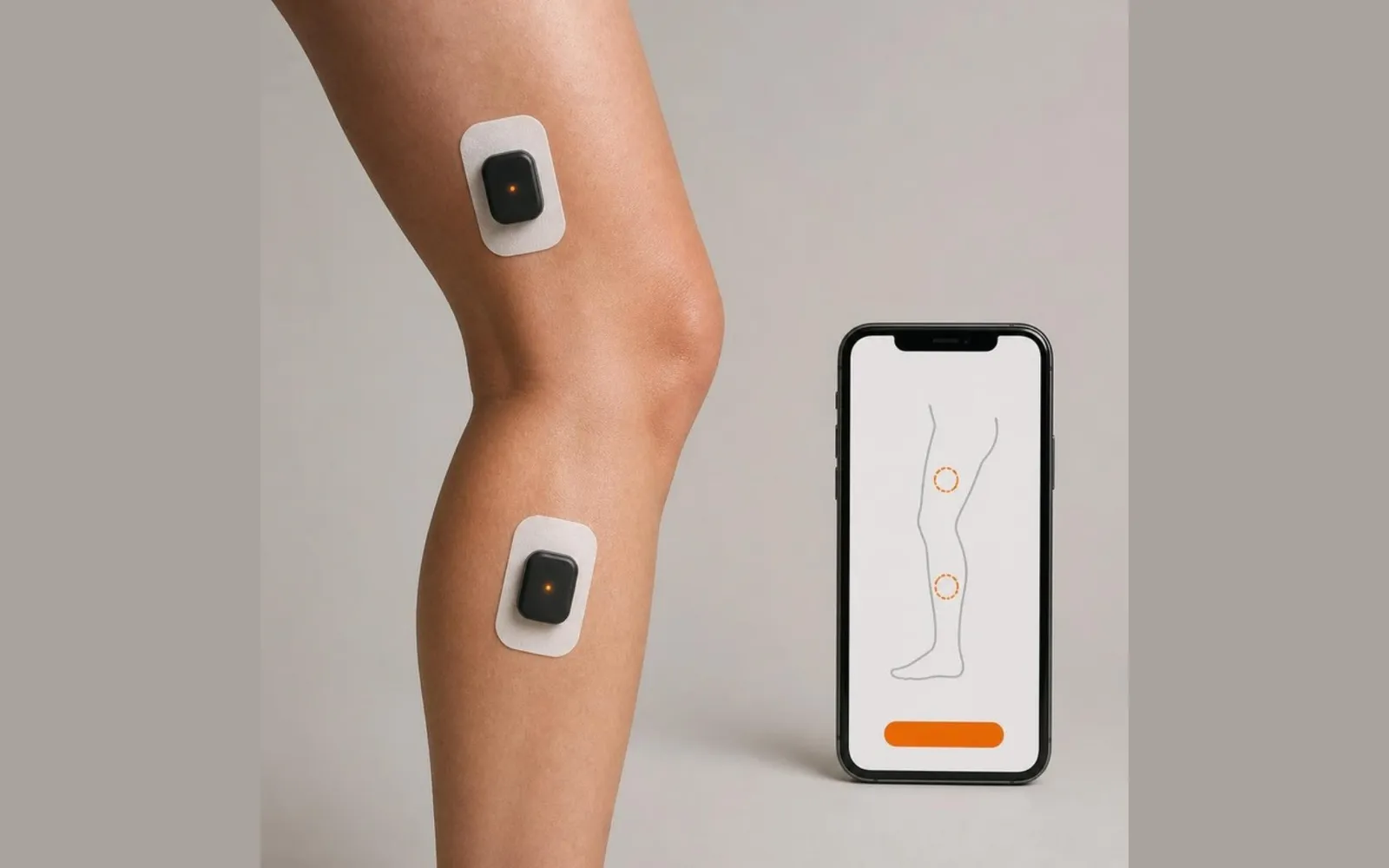
Liminex Knee is a patch on the thigh and one on the shin, each with a motion sensor that clicks out for reuse, with an app and an AI behind them. Together they record how the knee moves through ordinary days and catch the moments it gives way. One button in the app — ‘it gave way’ — makes the patient part of the measurement.
The clinician sees no raw data but a weekly summary: how the knee was loaded, how recovery is going, and an alert only when something changes. An objective record from home, next to the ten minutes in the consulting room.
We build the housing and the clip, the app, the software that turns two sensors into one picture of the knee, the AI and the clinician view. The sensor and the medical skin adhesive are proven components we buy. The track: medical device, EU MDR Class IIa.
One glance for the clinician
An objective home record next to the hand test, with no extra clinic time.
Confidence for the patient
Recovery that becomes visible week by week — and daring to move because you can see it.
Better decisions
Instability documented before a revision is decided on.
Data that does not exist yet
The first dataset of giving-way in daily life, as an open benchmark.
This is why this page exists. If you fit one of these rows, we want to talk to you.
How we work
Feasibility first
Every stage starts with whether it works and what it costs — an honest go/no-go before money goes into building.
Proven parts, our own core
What already exists we buy off the shelf. We only build what is not there yet: the software, the integration and the design around them.
Developed in the open
The status is on this page, estimates are called estimates, and partners get a quarterly update — also when things go badly.
Can you supply, pilot, advise or fund?
Send two sentences. You'll get the full proposal under NDA, and a call within a week with the engineer working on it.
Get in touch